

HARN recognizes that its business operations may directly and indirectly impact stakeholders across the value chain in terms of the environment. Therefore, the Company has established an environmental policy committed to driving and supporting operations that minimize environmental impacts while maintaining sustainable business growth.
Climate Change Management and Actions.
HARN places importance on reducing greenhouse gas emissions to mitigate global warming. The Company conducts analysis and assessment of climate-related risks such as flooding and changes in government regulations, which may affect business operations. HARN develops action plans to reduce risks and adapt to potential climate impacts in order to support its long-term targets of achieving Carbon Neutrality by 2040 and Net Zero greenhouse gas emissions by 2050.
Energy Management.
HARN has set a target to reduce electricity consumption by 30% by 2028, equivalent to an average reduction of 6% per year. The Company also aims to control and reduce fuel consumption by 5% per year compared to the 2023 baseline.
HARN has established an energy consumption data management system to support analysis and planning for electricity usage control. The Company also promotes indirect energy savings by installing 330 solar panels with a total capacity of 127 kW. In addition, HARN utilizes a PoE Lighting system, an intelligent lighting control system that uses internet cables instead of traditional electrical wiring to manage indoor lighting. The system automatically adjusts light levels when sufficient natural daylight is available and incorporates natural light harvesting to enhance illumination. These initiatives help reduce electricity consumption and operating costs while minimizing environmental impacts.
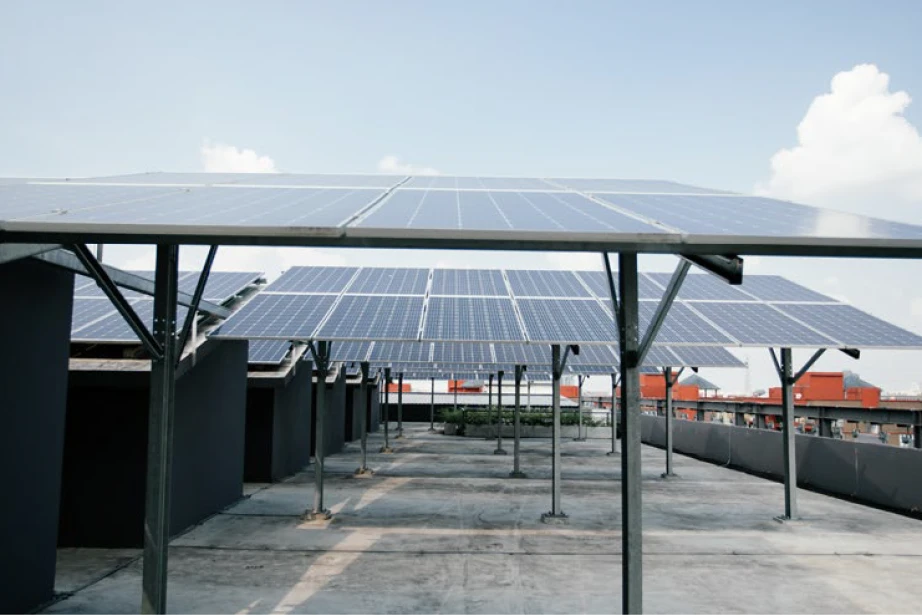
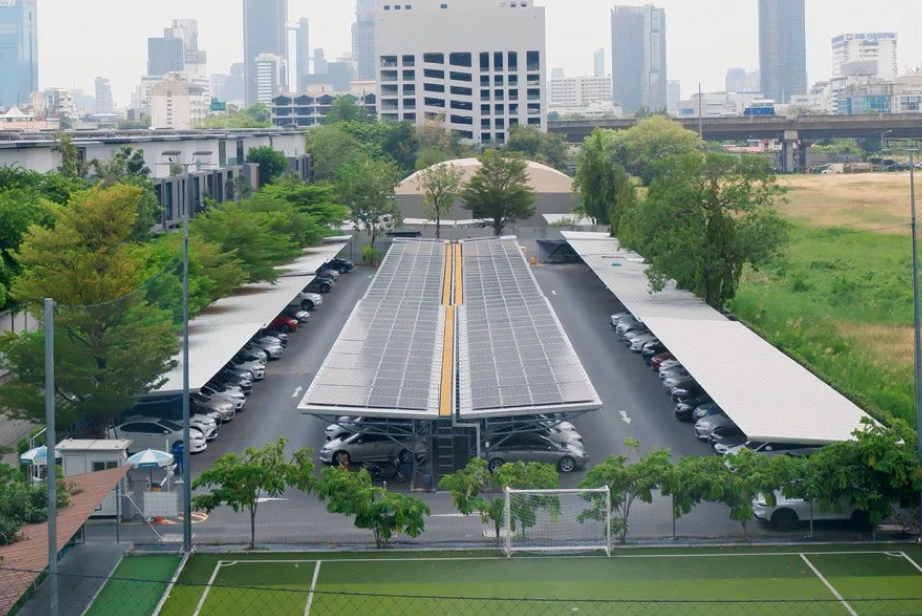
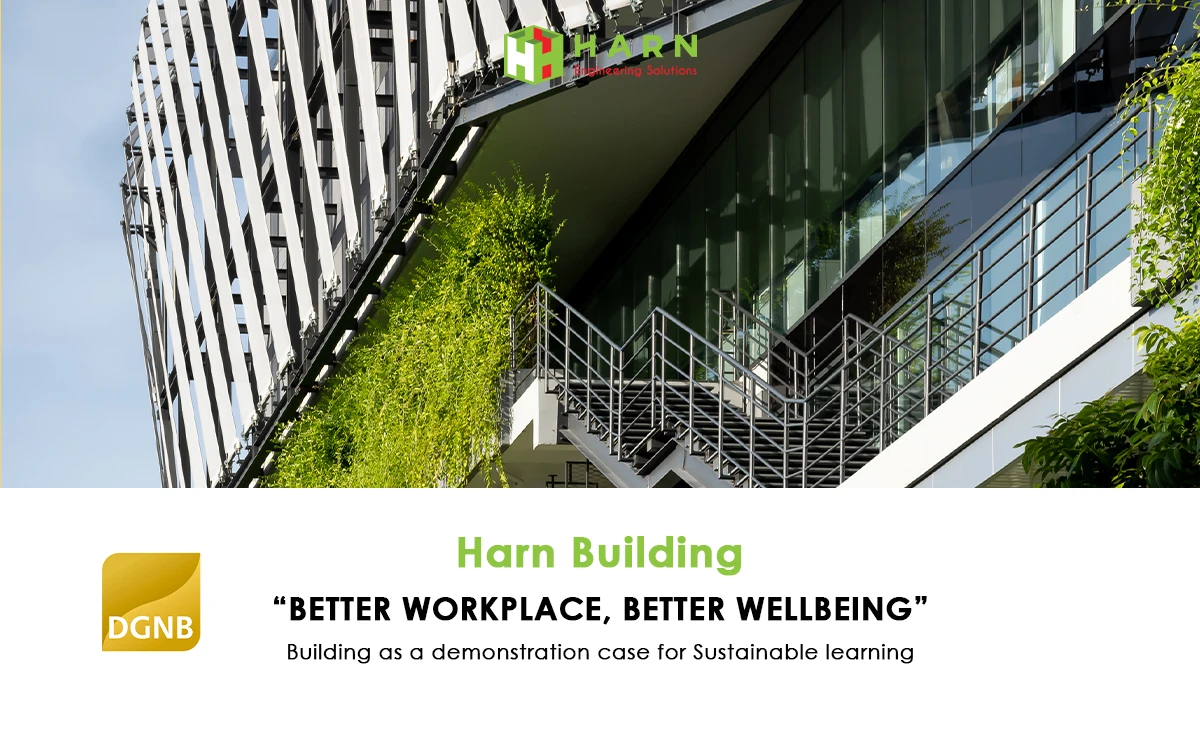
HARN additionally installed an additional 177 kW of solar panels at the beginning of 2024. As a result, in 2024 the Company was able to increase renewable energy generation, offsetting electricity consumption by approximately 41.92%. The office building’s average electricity consumption was recorded at 56 kWh/m²/year, exceeding the design target by 40%. This performance is considered extremely low energy consumption per square meter, close to the Zero Energy Building (ZEB) benchmark of 57 kWh/m²/year. As a result of its green building performance, HARN received the DGNB Green Building Gold Certificate awarded by the German-Thai Chamber of Commerce and DGNB GmbH in 2022.
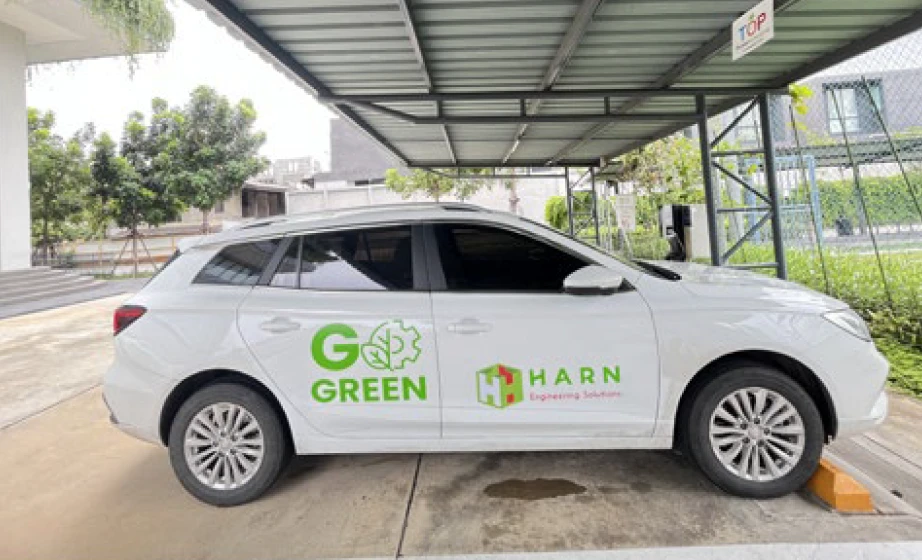
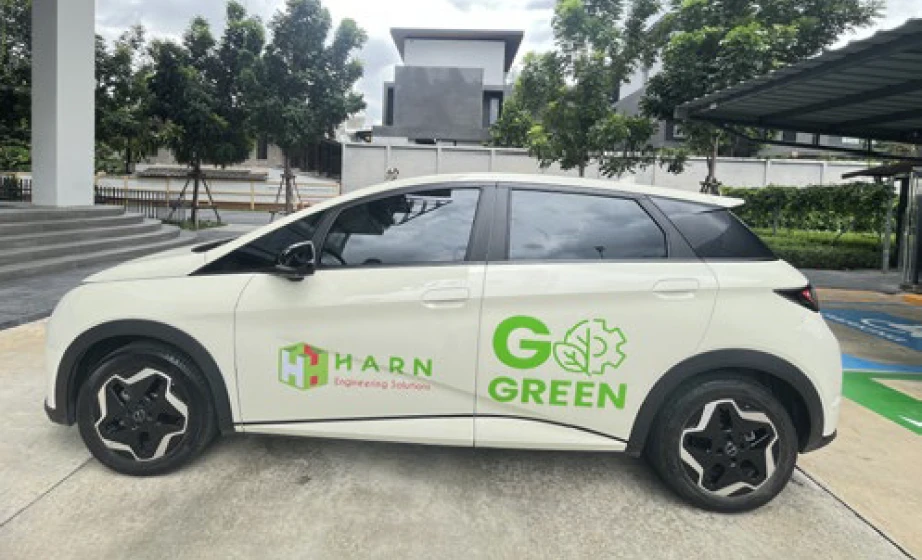
HARN has set a target to reduce emissions from fossil fuel consumption by transitioning its company vehicles used for business operations to electric vehicles. The Company aims to convert 60% of its fleet to EVs within 3 years and 100% within 5 years, using 2023 as the base year.
Water Resource Management.
HARN places strong importance on efficient water resource management. The Company has set a target to reduce municipal water consumption by 3% per year compared to the 2023 baseline.
HARN promotes integrated water resource management on an ongoing basis, focusing on efficient water usage. The Company enhances water management efficiency by recycling water for reuse, including utilizing condensate water from Air Handling Units (AHU) in air conditioning systems for watering plants. This practice not only helps reduce water costs but also decreases the volume of wastewater discharged into water sources. In addition, HARN regularly monitors and inspects water systems to detect abnormalities and reduce water loss. The Company has also installed an automated irrigation system connected to a rainfall measurement system, which prevents watering when it rains. This approach further improves water efficiency and reduces overall water consumption.
Waste, Waste Management, and Air Pollution Management.
HARN has set a target to reduce non-hazardous waste sent to landfill by 5% per year compared to the 2023 baseline. The Company also aims to reduce hazardous waste, chemical waste, and air emissions generated from its operations by 5% annually. In addition, HARN has established a goal of maintaining zero complaints related to pollution arising from its business operations.
HARN promotes employee awareness and knowledge of proper waste management, while fostering a culture of energy conservation and environmental responsibility. The Company also conducts campaigns to raise awareness of environmental issues among employees. Waste segregation is implemented within the organization into five categories: general waste, food waste, recyclable waste, hazardous waste, and chemical waste.
HARN implements air pollution control measures in parallel with its operational activities, including fire suppression agent filling processes, 3D printing production, and product demonstrations conducted within office and warehouse areas, all in compliance with applicable legal standards. The Company also manages emissions from company vehicles and logistics transport by transitioning from conventional fuel-powered vehicles to electric vehicles, as well as regularly inspecting service provider vehicles to ensure compliance with required standards. In addition, HARN has installed air quality monitoring devices around its office premises to continuously track ambient air conditions.
Greenhouse Gas Reduction Management.
HARN has set a target to reduce Scope 1 and Scope 2 greenhouse gas emissions by 5% per year compared to the 2023 baseline. The Company also aims to reduce Scope 3 emissions to zero by 2050. These initiatives support its long-term commitment to achieving carbon neutrality by 2040 and net-zero greenhouse gas emissions by 2050.
HARN has assessed climate-related risks and opportunities and developed strategic plans and innovation initiatives to support greenhouse gas reduction. These initiatives include the installation of solar power systems, increasing the share of renewable energy usage, and transitioning company vehicles to electric vehicles.The Company also integrates digital technologies into its operations, restructures its business toward a low-carbon model in the long term, and explores new environmentally friendly business opportunities. In addition, HARN supports carbon offset initiatives through natural carbon absorption projects under the “Care the Wild: Plant & Protect” program and studies approaches for carbon sequestration assessment. Furthermore, HARN’s Executive Director, Dr. Jane Charnnarong , recognizes the urgency of PM2.5 environmental issues and collaborates with government agencies, private sector partners, and the public to reduce forest fires and restore green areas. This includes initiatives that address livelihoods and knowledge development through the “Ban Ko Sandbox” project.